Overview
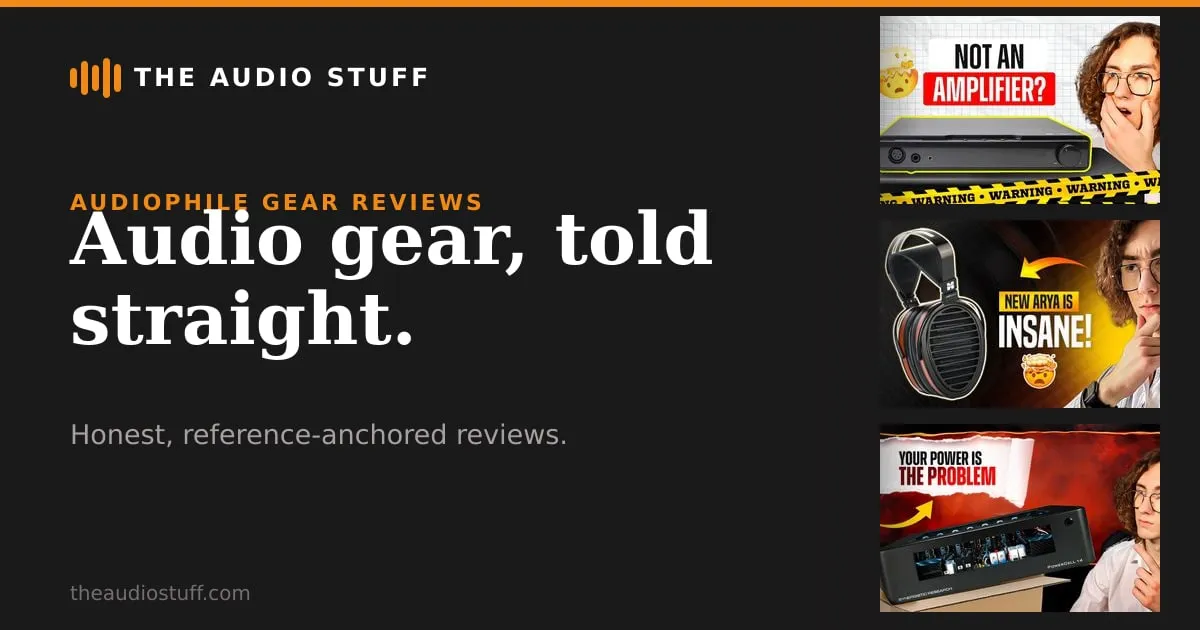
The Audio Stuff is an independent online publication dedicated to honest, reference-anchored reviews of audiophile and hi-fi audio gear. Founded by Jakub Charkiewicz, the site covers headphones, speakers, DACs, amplifiers, sources, and accessories — all evaluated through a rigorous, transparent methodology. Unlike many review sites that rely on affiliate revenue or sponsored content, The Audio Stuff explicitly bans paid verdicts and maintains a strict editorial firewall between manufacturers and published opinions.
The platform addresses a common problem in the audio community: conflicting, often biased reviews that make it difficult for consumers to make informed purchasing decisions. By anchoring every score to a fixed reference chain and publishing the exact scoring rubric, The Audio Stuff aims to provide reproducible, trustworthy evaluations. The site currently hosts 61+ reviews, 33 head-to-head comparisons, 6 buying guides, and 16 free browser-based audio tools.
Key Features
Reference-Anchored Scoring System Every product is scored on a 0–10 scale derived from five weighted axes: Tonality (30%), Technicalities (25%), Build & Ergonomics (15%), System Fit (15%), and Value (15%). Scores are mapped to verdicts: Reference, Highly Recommended, Recommended, Mixed, or Pass. The reference chain — a fixed set of previously reviewed components — ensures that a 9.0 on a headphone carries the same weight as a 9.0 on a DAC. The rubric is published in full on the about page.
No Sponsored Verdicts Policy Brands have zero editorial input. Pre-publication review of drafts is never granted. If a manufacturer pulls advertising over a negative review, that fact is disclosed in the piece. This policy is enforced across all content, making the site a rare source of unbiased opinion in a market often clouded by affiliate incentives.
Long-Form Listening Protocol Each review requires a minimum two-week listening period on the reviewer's personal chain, using multiple sources and genres. No first-impressions or demo-room verdicts are published. Flagship gear often receives four to eight weeks of evaluation. This depth reduces the risk of premature conclusions and captures how gear performs in real-world daily use.
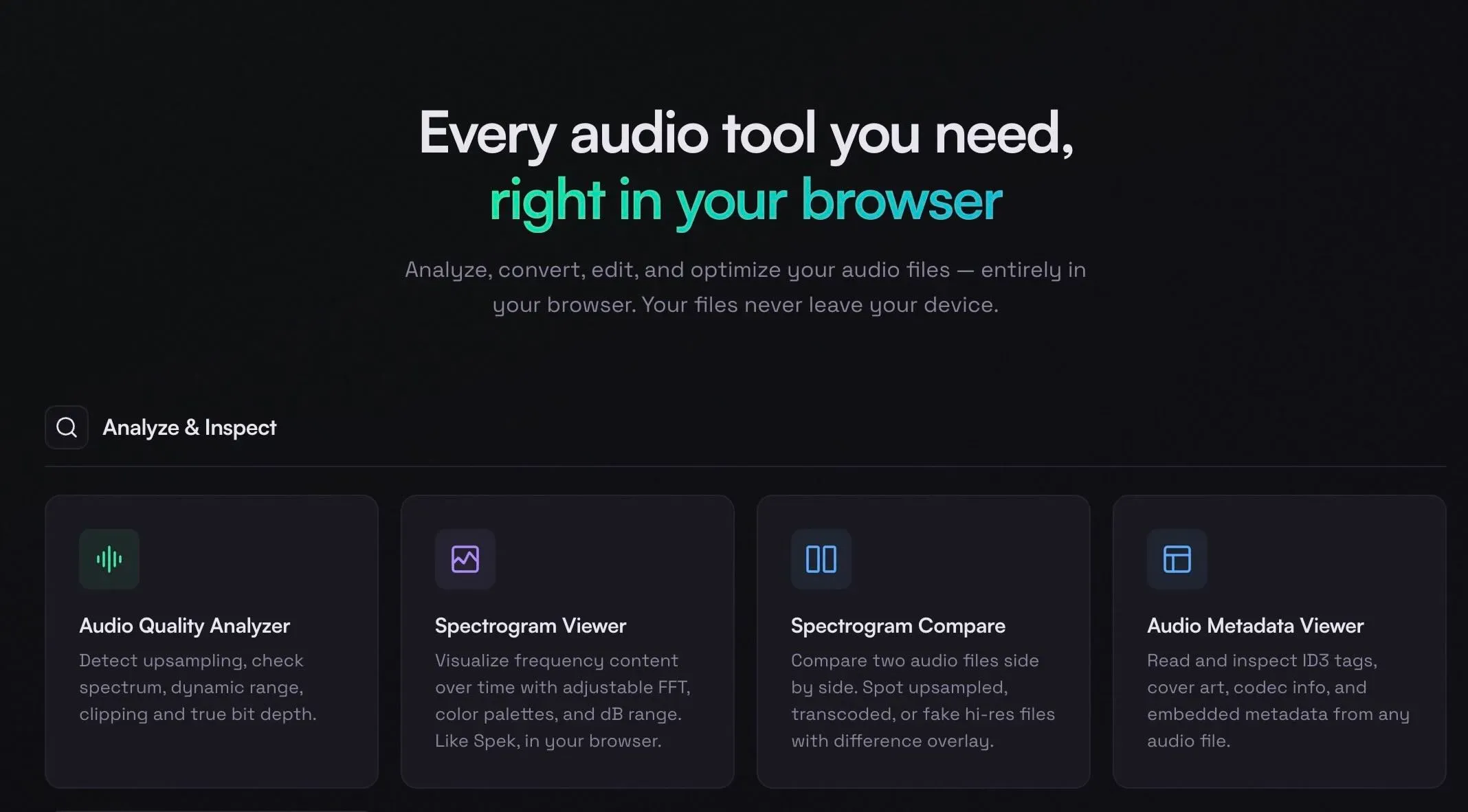
Free Browser-Based Audio Tools The site offers 16 tools that run entirely client-side — no signup, no upload, no tracking. These include a Headphone Power Calculator, ABX Blind Test, Hi-Res Fraud Detector, EQ Simulator, Room Mode Calculator, and a "Help Me Choose" product finder. Each tool is built from the same engineering principles that back the reviews.
Head-to-Head Comparisons The Compare section pits similar products against each other on the same chain, same listener, same recordings. Each comparison explicitly names the reference units used, so readers can reproduce the context if they own those references. Currently 33 comparisons are available, covering tight matchups like HIFIMAN Arya Organic vs. Arya Unveiled.
Buying Guides Curated from Scored Reviews Guides such as "Best DAC Under $2,000" or "Best Open-Back Headphones" list only products that have been formally reviewed and scored. Each guide includes a top pick with its score, and all picks are ranked by actual performance rather than commercial relationships.
Transparent Disclosure of Loaner Units Every review header flags whether the unit was purchased outright or loaned by the manufacturer. This disclosure is mandatory and visible at the top of each article, allowing readers to weigh potential bias.
How It Works
A typical review begins when a product is identified for coverage — either through reader requests, manufacturer submissions, or the editor's own research. The unit is acquired (purchased or loaned) and then placed on the reference chain for a minimum of two weeks. The reference chain consists of six fixed components: a Denafrips Enyo 15th Anniversary DAC, HIFIMAN EF400 headphone amp, HIFIMAN Arya Organic headphones, Triangle Australe EZ speakers, Denafrips Hermes 12th Anniversary digital transport, and Synergistic Research PowerCell 14 power conditioner.
During the listening period, the reviewer compares the new gear against the appropriate reference unit in the same price tier. Volume is matched to ITU-R BS.1770-4 standards. Multiple genres are used, and the reviewer takes notes on each of the five scoring axes. After the listening window closes, a weighted score is calculated and mapped to a verdict. The review is written, fact-checked, and published — without any manufacturer preview.
Readers can browse reviews by category (headphones, speakers, DACs, etc.) or use the "Help Me Choose" tool to answer four quick questions and receive a ranked shortlist. The site also offers an RSS feed and a JSON feed for subscribers who prefer to follow updates programmatically.
Use Cases
Audiophile Upgrading Their Headphone Setup A reader looking to upgrade from a mid-range headphone to a flagship model can visit the headphone reviews section and compare scores across multiple options. The reference-anchored scoring ensures that a 9.1 on one model is directly comparable to a 9.2 on another, simplifying the decision.
First-Time Buyer of a DAC Someone new to external DACs can use the "Best DAC Under $2,000" buying guide to see six scored picks with a clear top recommendation. The guide links to full reviews, so the buyer can read detailed listening impressions before purchasing.
Professional Seeking Acoustic Treatment A home studio owner can read the review of Ekustik Woody Queen acoustic panels (scored 9.0) and compare them against other accessories in the accessories category. The review includes NRC ratings and real-world absorption data.
Budget-Conscious Music Lover A listener on a tight budget can filter reviews by price using the built-in sorting. For example, the Kiwi Ears Belle IEM at $30 is reviewed alongside the $50 Cadenza II and $350 Orchestra II, helping the buyer understand the diminishing returns at each price point.
Tech-Savvy User Testing Audio Claims A skeptical user can run the ABX Blind Test tool to see if they can actually hear differences between audio formats or cables. The tool returns a p-value, providing statistical rigor to personal listening tests.
Pricing & Value
The Audio Stuff itself is completely free to access. There are no paywalls, subscription fees, or premium tiers. All 61+ reviews, 33 comparisons, 6 guides, and 16 tools are available without registration. The site is supported by the creator's own resources and YouTube ad revenue — not by affiliate commissions or sponsored content.
For readers, the value is clear: unbiased, methodologically sound reviews that save time and money by preventing bad purchases. The free tools alone — particularly the Hi-Res Fraud Detector and Headphone Power Calculator — offer utility that would cost money or require software installation elsewhere. The only cost is the reader's time, and the site's clean, fast-loading design minimizes that.
Final Verdict
The Audio Stuff stands out as a rare example of editorial integrity in the audiophile review space. Its reference-anchored scoring, transparent methodology, and strict no-sponsored-verdicts policy provide a trustworthy resource for anyone investing in audio gear. The inclusion of free tools and head-to-head comparisons adds practical value beyond typical review sites.
Areas for improvement include a relatively small review catalog (61 reviews) compared to larger publications, and the lack of a community forum or user review section. Additionally, the site's focus on high-end gear may leave budget-conscious readers with fewer options, though the existing budget reviews are thorough.
Overall, The Audio Stuff is highly recommended for audiophiles, home studio owners, and anyone making informed purchasing decisions in the hi-fi market. Its commitment to reproducibility and honesty sets a standard that the industry would benefit from following.