Overview
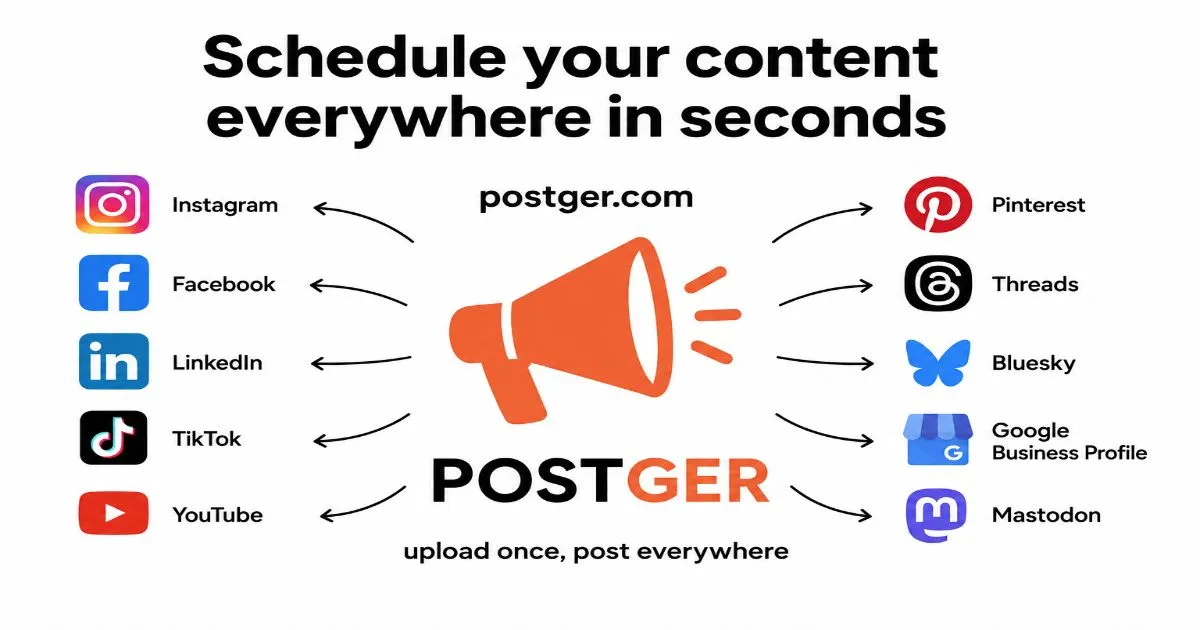
Postger is a social media management platform designed for teams and agencies that need to coordinate content across multiple social networks. Launched as a modern alternative to legacy tools like Hootsuite and Buffer, Postger emphasizes a clean interface, direct API integrations (no aggregators), and flat-rate pricing without per-seat fees. The platform supports 10+ platforms including Facebook, Instagram, LinkedIn, TikTok, YouTube, Pinterest, Threads, Bluesky, Mastodon, and Google Business Profile. Its core value proposition is consolidating scheduling, approval workflows, client portals, and analytics into one workspace, reducing the need for multiple subscriptions.
Key Features
Content Calendar – A drag-and-drop visual calendar that supports month, week, and day views. Users can schedule posts, set recurring time slots, and manage queues. The calendar provides a bird's-eye view of content across all connected profiles, making it easy to spot gaps or overlaps.
Multi-Platform Publishing – A single composer allows users to write a post once and customize it per platform. Media attachments, carousels, and multi-image posts are supported. Each platform's specific formatting requirements are handled automatically, and previews are available before publishing.
Approval Workflows – Posts can be routed through a review process where managers or clients can leave inline comments and approve or reject content. This is particularly useful for agencies that need client sign-off before publishing. The client portal uses magic links, so clients don't need a Postger account.
Unified Inbox – All comments, direct messages, and mentions from connected platforms are aggregated into a single feed. This allows teams to respond to engagement without switching between apps. SLA tracking is available on the Agency plan.
Analytics & Reporting – Per-post and channel-level metrics track engagement, reach, and growth. KPI cards and trend charts visualize performance. Reports can be exported as PDF or CSV. The platform also offers AI-powered content scoring and auto-generated captions.
Idea Board – A Kanban-style board for brainstorming and organizing post ideas. Cards can be moved from "Idea" to "Draft" to "Scheduled," providing a structured content pipeline.
Smart Queues – Recurring posting slots with auto-scheduling. Users set up time slots once, and the system fills them with content from a queue, ensuring consistent posting frequency.
How It Works
After signing up for a free trial, users connect their social media accounts via direct API authentication. The onboarding process guides users through setting up their first workspace, inviting team members, and configuring approval workflows if needed. The main dashboard presents a content calendar where users can drag and drop posts to schedule them. The composer allows per-platform customization, and posts can be saved as drafts or submitted for approval. Once approved, posts are published automatically at the scheduled time. The unified inbox collects incoming messages, and the analytics section provides performance data. Users can also create idea cards on the Kanban board and convert them into scheduled posts.
Use Cases
Agency Managing Multiple Clients – An agency with 20+ client accounts uses Postger's workspaces to isolate each brand. The client portal allows clients to review and approve content without needing an account. The flat-rate Agency plan means no per-seat fees, so the entire team can collaborate without cost scaling.
Marketing Team Coordinating Campaigns – A marketing team of five uses the content calendar to plan a month-long campaign across Instagram, Facebook, and LinkedIn. Approval workflows ensure the marketing director reviews all posts before publishing. Analytics help track which content drives the most engagement.
Solo Creator Scheduling Content – A solo creator uses the Starter plan to schedule posts for five profiles. The idea board helps organize content themes, and smart queues maintain a consistent posting schedule. Basic analytics provide insights into post performance.
Social Media Manager for a Brand – A social media manager handles 12 accounts for a single brand. The unified inbox aggregates all comments and DMs, enabling quick responses. The media library stores assets with tags and folders for easy retrieval.
Enterprise Team with Custom Roles – A large team uses custom roles and permissions to control access. The AI Agent API allows integration with external tools for automated content drafting. Webhooks enable custom workflows.
Pricing & Value
Postger offers three tiers: Starter ($17/month yearly or $19 monthly) for solo creators with 5 profiles, 1 workspace, and 1 user; Pro ($25/yearly or $29 monthly) for growing teams with 15 profiles, 3 workspaces, and 3 users; and Agency ($41/yearly or $49 monthly) for teams and agencies with unlimited profiles, workspaces, and users. All plans include a 7-day free trial and a 14-day money-back guarantee. The Agency plan is the best value for collaborative teams, as it includes approval workflows, client portal, advanced analytics, and AI tools. The flat-rate pricing is a significant advantage over competitors that charge per seat.
Final Verdict
Postger is a well-designed social media management tool that balances feature depth with ease of use. Its direct API integrations ensure reliable publishing, and the flat-rate pricing model is refreshingly transparent. The approval workflows and client portal are standout features for agencies. However, the platform is relatively new, so the ecosystem of third-party integrations is smaller than established competitors. Additionally, some advanced analytics features are limited to the Agency plan. Overall, Postger is a strong choice for teams and agencies that want a modern, affordable alternative to legacy tools. For solo creators, the Starter plan offers good value, but the Pro plan is where the platform truly shines.
For more details, check out their pricing page or explore the features overview. You can also read about their platform integrations.