Overview
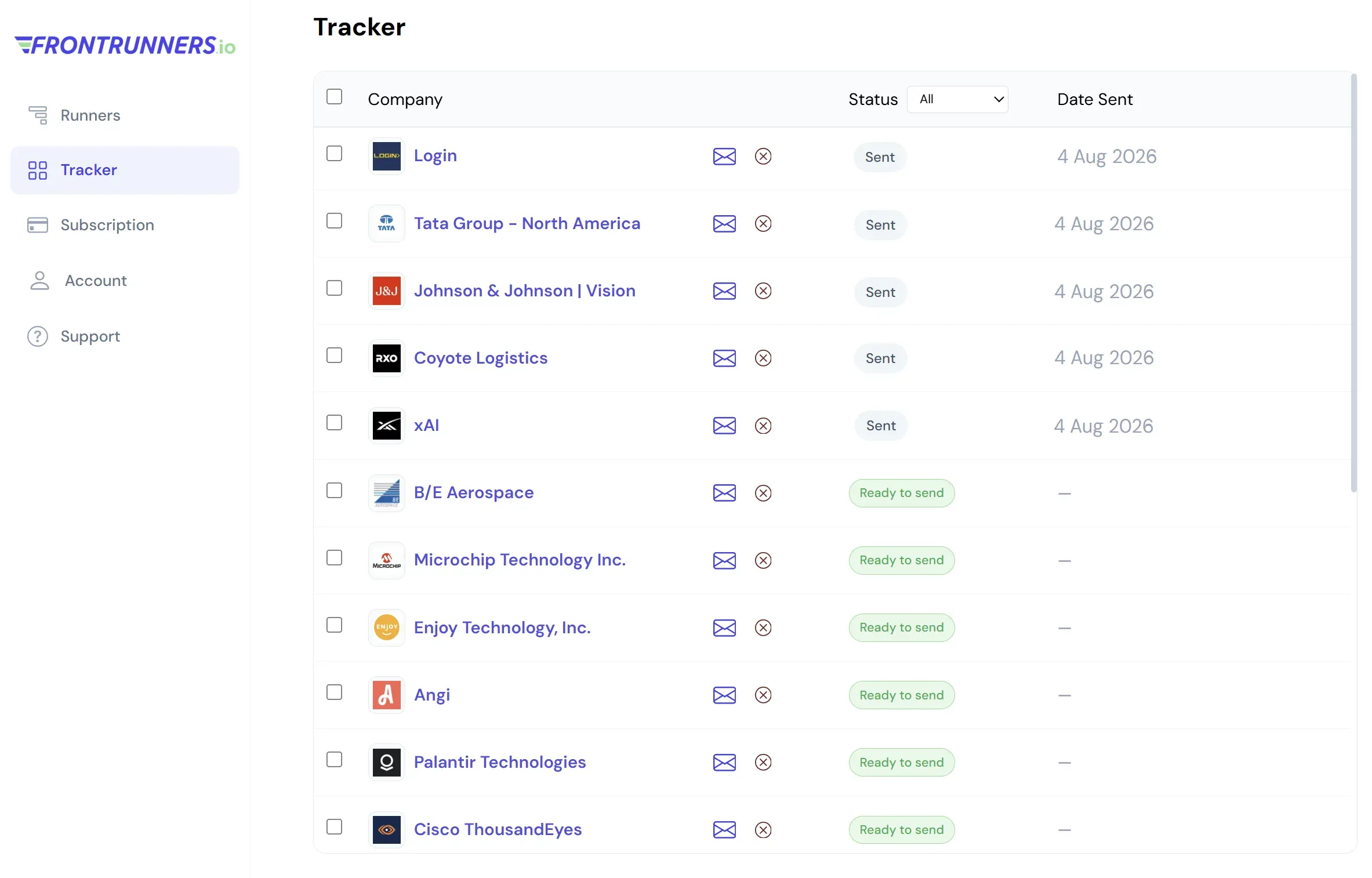
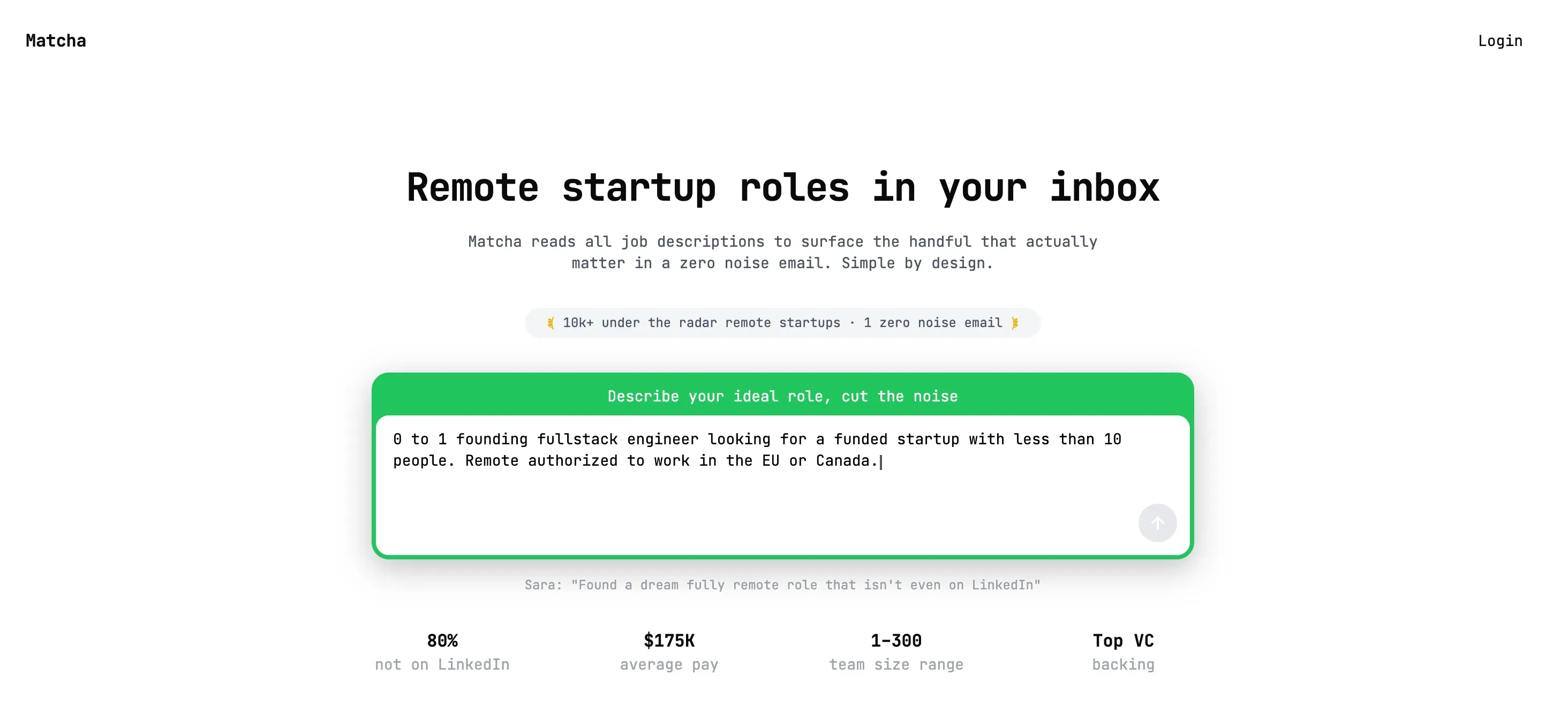
Matcha positions itself as a minimalist job discovery platform for remote startup roles. In a market saturated with job boards brimming with irrelevant listings, Matcha promises a focused alternative: a single daily email that surfaces only the most relevant opportunities from over 10,000 under-the-radar remote startups. The service claims that 80% of these roles are not posted on LinkedIn, targeting candidates who seek high-growth environments with competitive compensation—the average advertised pay is $175,000. By reading every job description and applying a curation algorithm, Matcha aims to eliminate the noise that plagues traditional job searches. Its positioning is squarely at professionals willing to trade breadth for quality, serving as a specialized funnel for VC-backed startups looking for talent.
Key Features
Daily Curated Email – The core delivery mechanism is a single email each day containing a handful of handpicked job matches. This zero-noise approach reduces decision fatigue and ensures that every listing is worth a candidate’s attention. The email includes roles that haven’t been seen on major platforms, giving early access to exclusive opportunities.
Large Startup Database – Matcha crawls job descriptions from over 10,000 remote startups, concentrating on those that are well-funded (backed by top venture capital firms) and actively hiring. This database is refreshed daily, providing a up-to-date snapshot of the remote startup talent market.
Smart Curation Engine – The platform reads and analyzes each job description to match candidates based on their stated preferences. Users describe their ideal role (via a textarea on the landing page), and the engine filters the 10k+ listings down to the few that truly align. This avoids the common problem of keyword-based searches that deliver false positives.
High Compensation Focus – Roles on Matcha skew toward higher salaries, with an average pay of $175,000. The platform emphasizes this metric to attract experienced professionals and signal that the opportunities are competitive. This positions Matcha as a premium alternative to general job boards.
Transparent Startup Profiles – Each job listing includes key data points: team size (1–300 employees), funding stage (Top VC backing), and the percentage of roles not found on LinkedIn. This transparency helps candidates assess company stability and growth potential before applying.
Simple Onboarding – There is no complex registration flow. Users simply enter a description of their ideal role and provide an email address. The service then begins sending curated matches. The low friction aligns with the product’s emphasis on simplicity.
How It Works
The user journey begins with landing on the Matcha homepage, where a prominent textarea invites them to “Describe your ideal role, cut the noise.” After typing a few sentences about job preferences (e.g., “Senior backend engineer at a Series A fintech startup”), the user submits their email. Matcha’s engine then scans its database of job descriptions from over 10,000 remote startups, using natural language processing to identify roles that strongly match the description. Each day, the user receives a single email containing a shortlist of 3–5 positions that the algorithm considers highly relevant. The email includes direct links to each job posting, allowing the user to apply on the startup’s site. Users can refine their preferences over time by updating their description, and they can browse all current openings via the /jobs page, which provides an overview of available roles with key stats like average pay and team size. The service is entirely email-driven, requiring no app installation or dashboard maintenance.
Use Cases
Senior Engineer Exploring Startup Opportunities – A lead engineer at a large tech company wants to move to a remote startup but is overwhelmed by generic job boards. Matcha delivers a daily email with 3–5 well-matched roles from VC-backed startups, including one that is not listed on LinkedIn. The engineer applies and lands a role with a 30% salary increase and equity.
Product Manager Looking for Early-Stage Growth – A PM with 5 years of experience is interested in product-led growth roles. After describing their interest in “product-led growth at a seed-stage B2B SaaS startup,” Matcha surfaces a match from a 10-person company. The PM gets in early, influences product direction, and benefits from rapid career growth.
Career Changer Targeting Remote Work – A non-tech professional seeking a transition into a startup operations role uses Matcha to find companies that value diverse backgrounds. The curated list includes a customer success role at a Series A startup paying $120K, which is not advertised elsewhere. The user successfully transitions industries.
Freelancer Seeking Full-Time Remote Work – A freelance designer wants a steady remote position at a funded startup. Matcha filters out contract roles and focuses on full-time openings. Within two weeks, the designer receives a match for a senior design role at a top-VC-backed company, leading to a stable income and benefits.
Recruiter Sourcing Talent – Although primarily for job seekers, a recruiter at a VC-backed startup can view the /jobs page to understand how competitors position roles. The data on average pay and team size also helps in benchmarking compensation packages.
Pricing & Value
Matcha does not publicly disclose pricing on its homepage. The service appears to be free for job seekers during the initial launch phase, as there is no mention of a paid tier or subscription. This freemium model is common among curated job platforms, which often monetize through employer sponsorships or future premium features (e.g., priority placement). From a value perspective, the service saves hours of manual job board scanning by delivering a highly targeted shortlist. The focus on well-paid, VC-backed startups adds intrinsic value for experienced professionals. If a paid tier is introduced, a reasonable price point would be $10–$20 per month, considering the time savings and exclusivity. However, the lack of transparent pricing means users should verify current costs by visiting the pricing page (if available) or checking for updates. Overall, the current free offering provides substantial value for anyone targeting remote startup roles.
Final Verdict
Matcha delivers on its promise of a zero-noise job search experience for remote startup roles. Its strength lies in curation: by scanning thousands of listings daily and filtering out irrelevant ones, it saves users significant time and mental energy. The emphasis on high-paying, VC-backed companies with roles not found on mainstream platforms is a clear differentiator. However, the narrow focus means it is not suitable for those seeking jobs outside of remote startups or in non-tech functions. The lack of detailed pricing and the absence of features like application tracking or interview scheduling may limit its usefulness for heavy job seekers. Nevertheless, for professionals specifically targeting funded remote startups, Matcha is a highly effective tool. It is a worthwhile addition to any job search toolkit, especially for those who value quality over quantity. We recommend signing up to test its curation quality firsthand and browsing the active listings to gauge the variety of roles available.